The oceans are the origin and engine of all life on this planet.
About 44% of the world’s population lives within 150 km of the sea.
90% global warming created by humans since the 1970s has been absorbed by the marine waters.
3 out of every 7 people in the world depend on seafood as their main source of protein.
And this sea is existing on edge today.
And so is marine life, our climate and the food security of billions.
Unprecedented sea-level rise combined with dangerously warming waters due to climate change, pollution, overfishing – all leave the oceans hot, acidic and lifeless.
Polluting, poisoning, plundering – we are driving the sixth mass extinction on Earth today. With an unprecedented loss of marine giants, unlike any in the fossil record – hunting and killing larger species in a way that threatens the disruption of ocean ecosystems for millions of years to come – humanity is taking from the seas more than it can give back. Much more.
But even if you live hundreds of miles from shore, you need a healthy ocean. We all do.
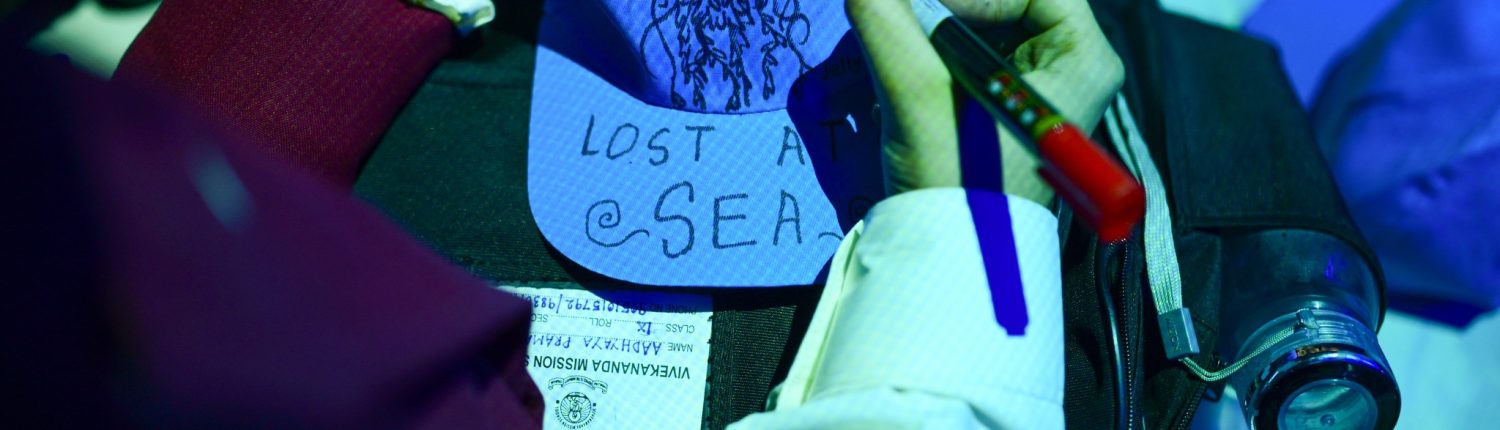
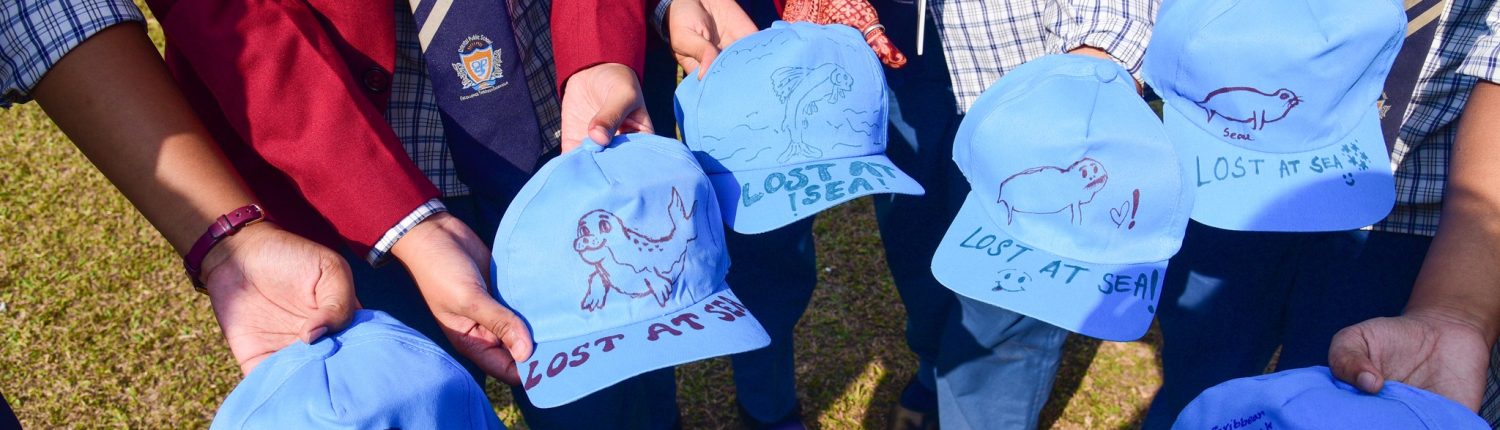
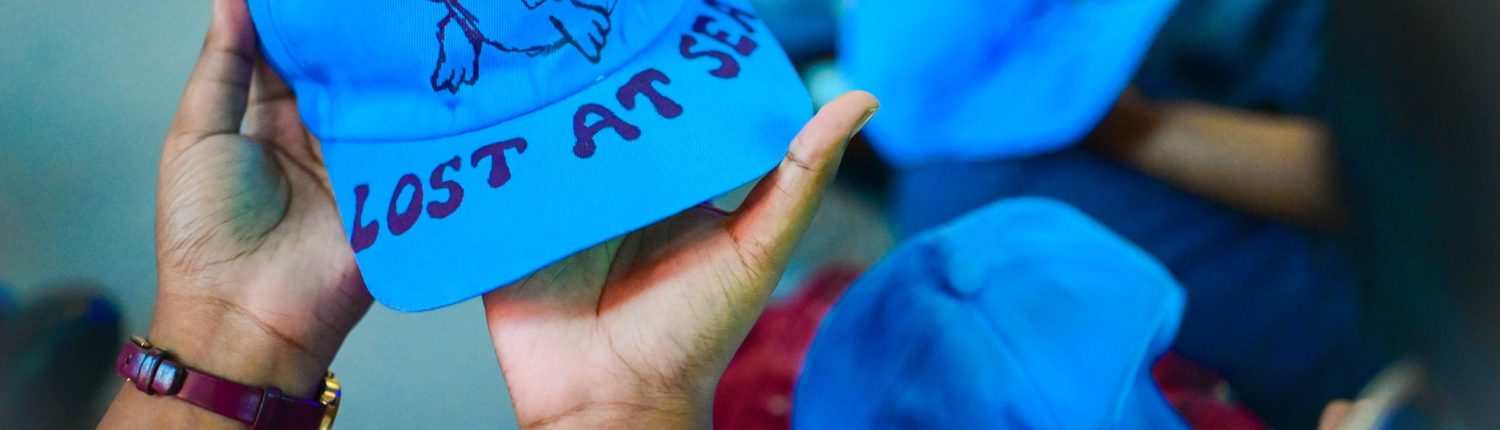
Immediate and transformative actions may still prevent many species – including us – from being lost at sea.
But it can be hard to care for a place we’ve never experienced. This Gallery invites you to sea more.
No matter how deep or dark – our oceans are still alive. Let us not leave them silent, static, shadowed.
Make waves by discovering the deep. Dive for species which show the way by turning the tide and staging a coral comeback. Stay current with modern approaches of farming for fish. All because, our oceans are worth it – and more.
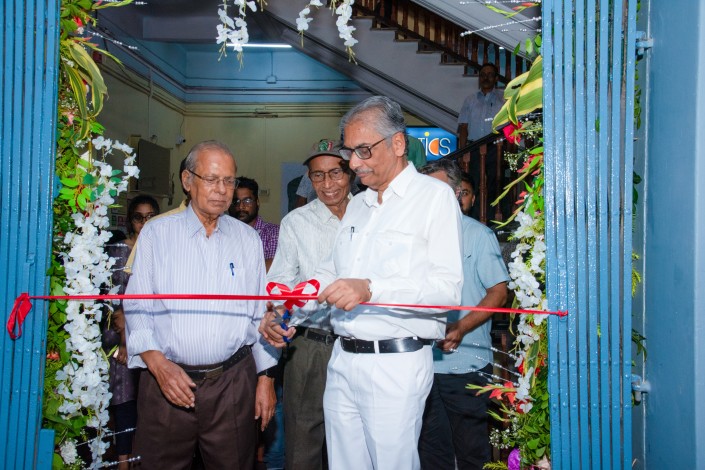
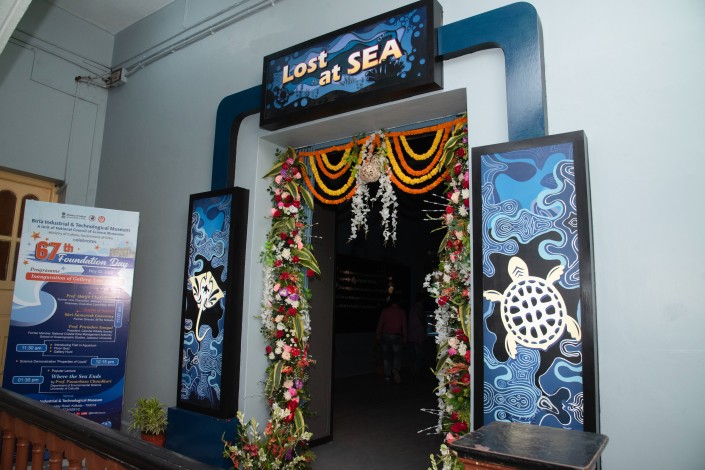
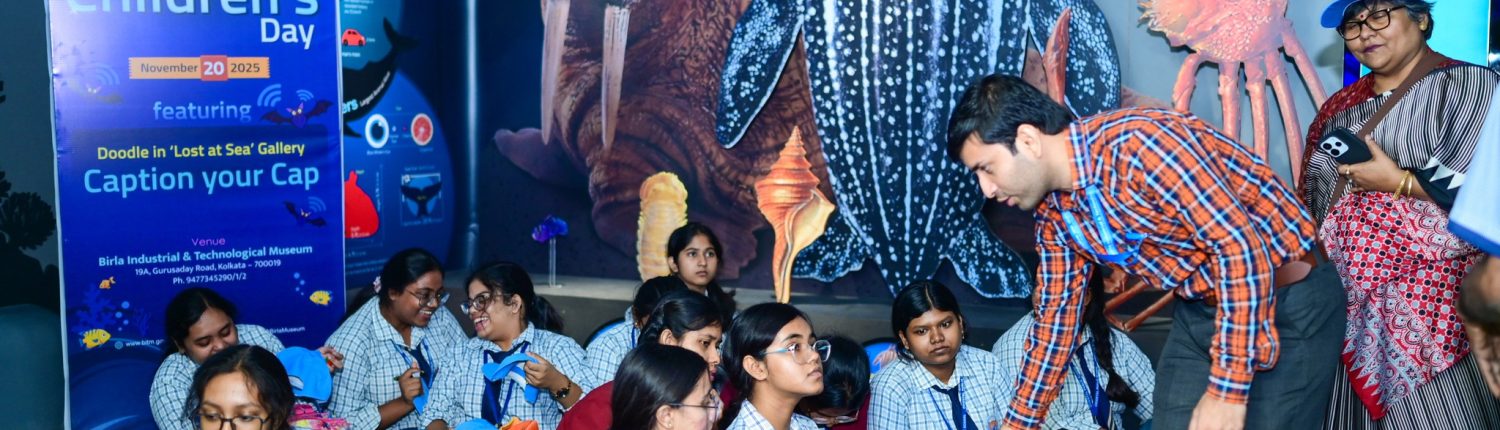
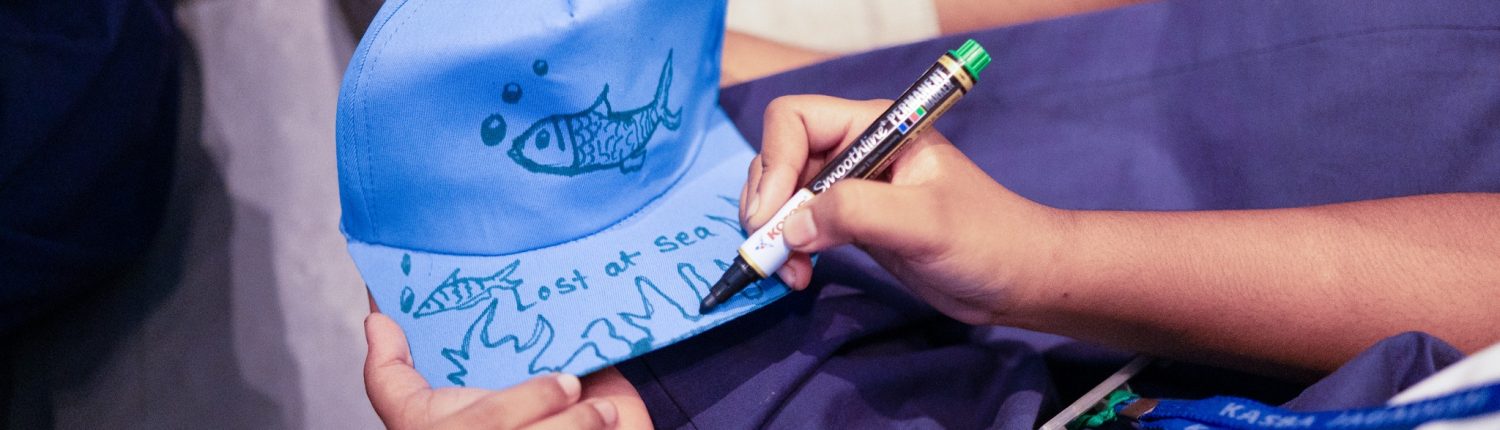
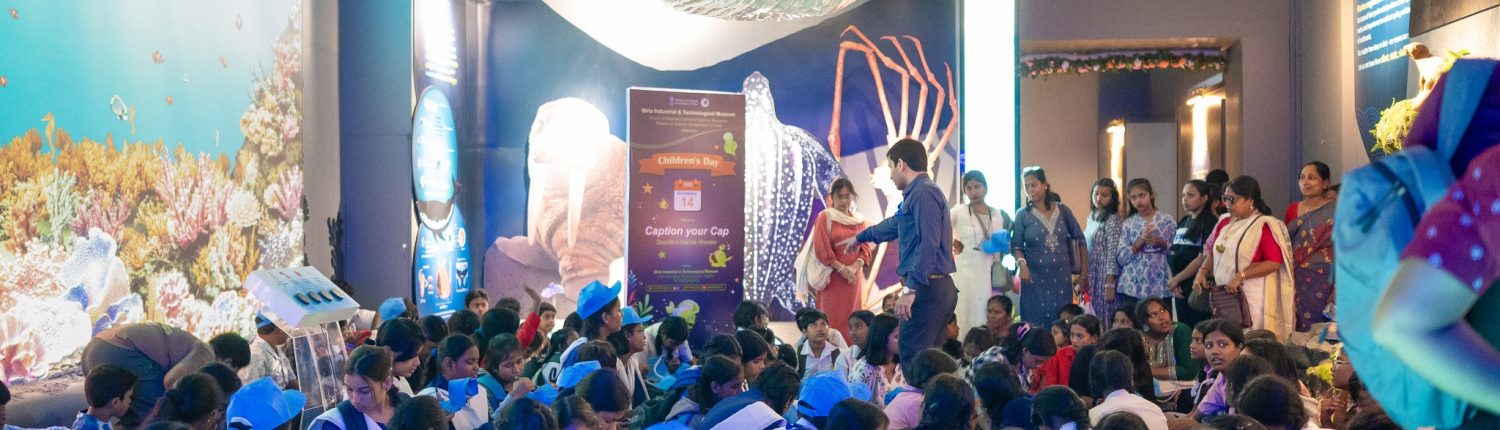
Celebrating all things ocean, Birla Industrial & Technological Museum, a Unit of National Council of Science Museums, Ministry of Culture, Government of India conceptualized, designed and developed an interpretive Gallery ‘Lost at Sea’ – introduced to audiences in two phases. In the first phase, launched on May 02, 2025, the Foundation Day of BITM, visitors were invited to ‘Sea More’ – focusing on the utility of oceans as a sustainable resource – for marine animals, humans and ecology as a whole. Stressing the importance of ‘Existing amidst Extinction’ the second phase, due for unveiling on November 14, 2025, the Children’s Day, highlights the perks and perils of being an ocean resident – both past and present – by bringing alive extinct and endangered marine species and exploring oceans as susceptible, living bodies of wonder.
Exhibits developed for ‘Sea More’ Section
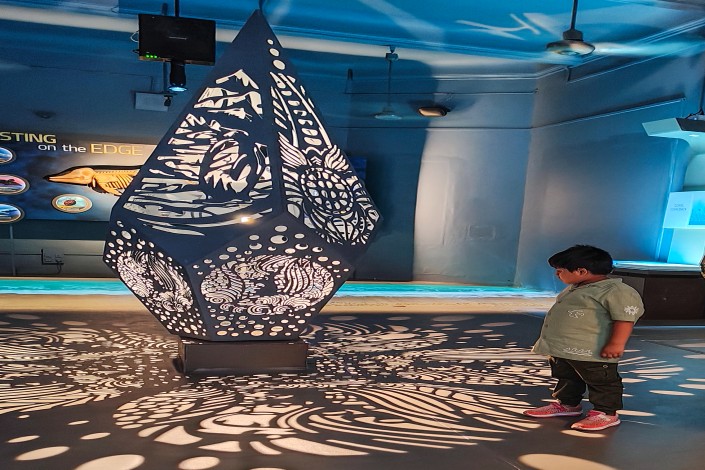
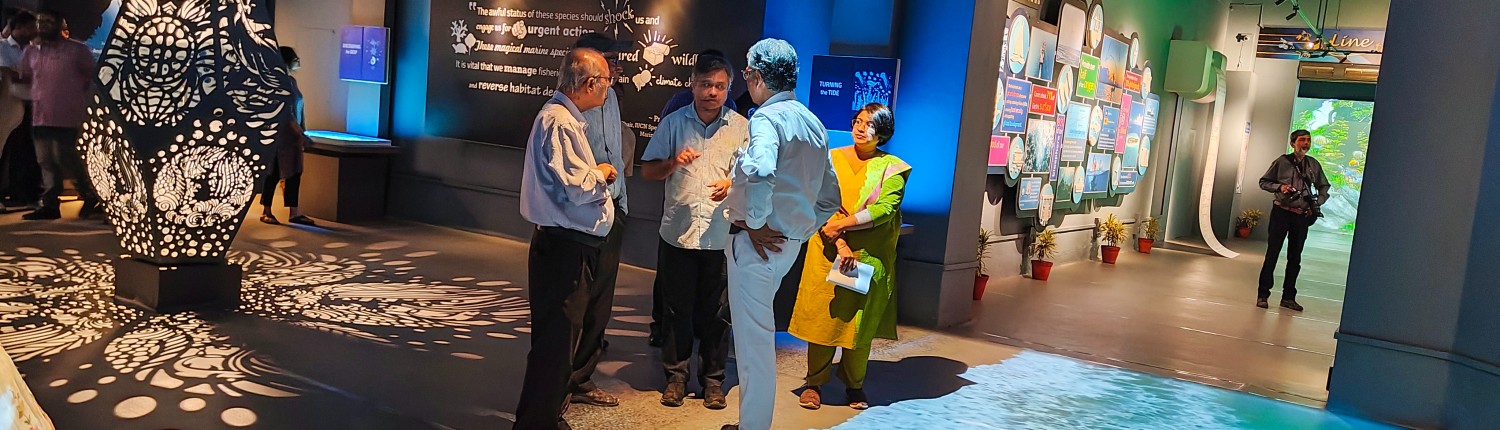
Lantern of Life: Rotating light display exhibiting silhouettes of endangered marine species
IR-enabled Multimedia Consoles:
- Discovering the Deep – Meet deep sea creatures and how they survive
- Turning the Tide – Discover new marine species, first observed in this decade
- Coral Comeback – Uncover what makes some Corals more resistant to ocean warming
- Farming for Fish – Learn how we rectified our mistakes and invested in sustainable practices by modernizing mass fishing techniques
Existing on Edge:
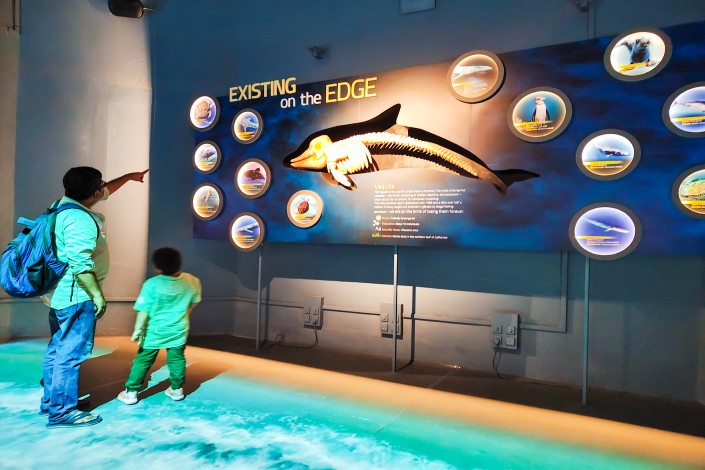
Translit display featuring 15 critically endangered and endangered species, with true-to-form skeleton system of Vaquita – the world’s rarest marine mammal. The most endangered cetacean – the family consisting of whales, dolphins, and porpoises – today has as few as around 10 individuals remaining. This little porpoise wasn’t discovered until 1958 and a little over half a century of being caught and drowned in gillnets by illegal fishing operations – we are on the brink of losing them forever.
Walk on the Beach:
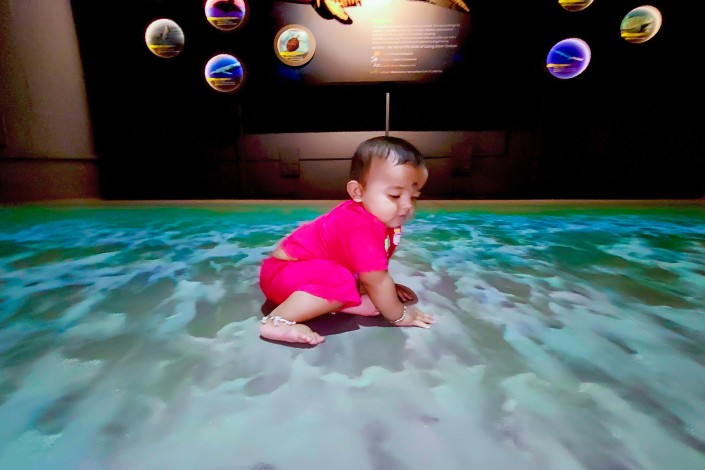
AR-enabled Floor Display displaying messages of marine extinction while one enjoys a walk on the dynamic and serene beachfront.
What’s the Ocean Worth?
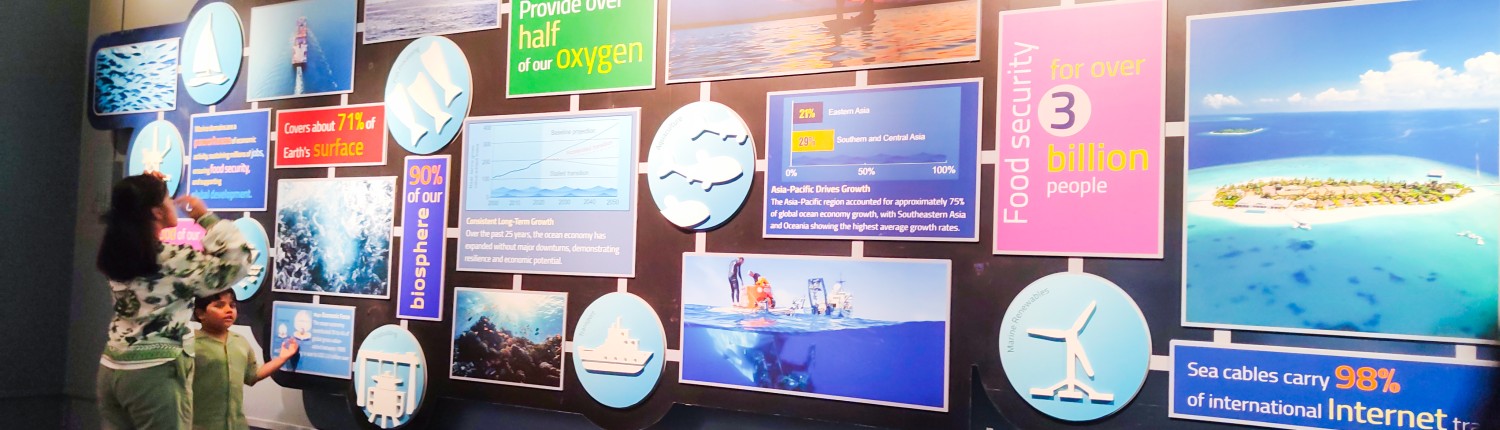
Blue economy domains with tangible and intangible contributions highlighted.
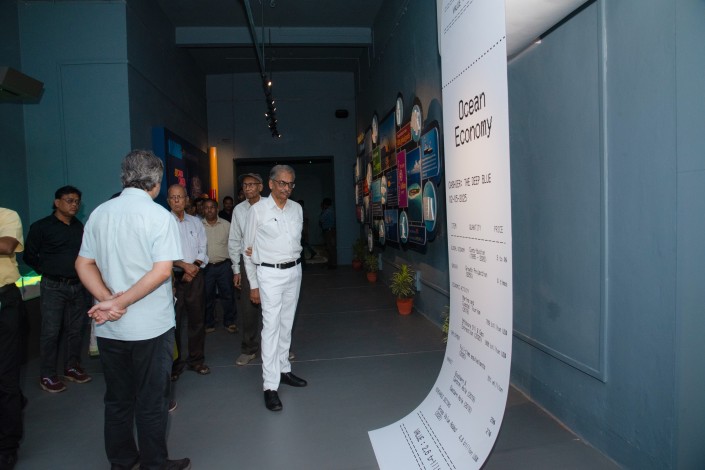
Ocean – The 8th Largest Economy:
Data Representation with 3D Column Graph and Macro Bill, quantifying that if the ocean were a country, it would be the eighth largest economy in the world.
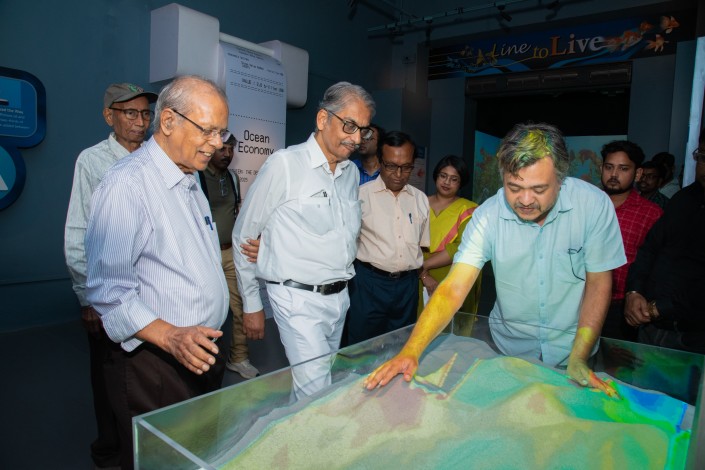
See the Sea
Interactive AR-based real-time application showing changing comtours with shifting of sand surfaces below – akin to remote sensing applications for sea-floor measurement.
Di-Gyo-taku: From Line to Life
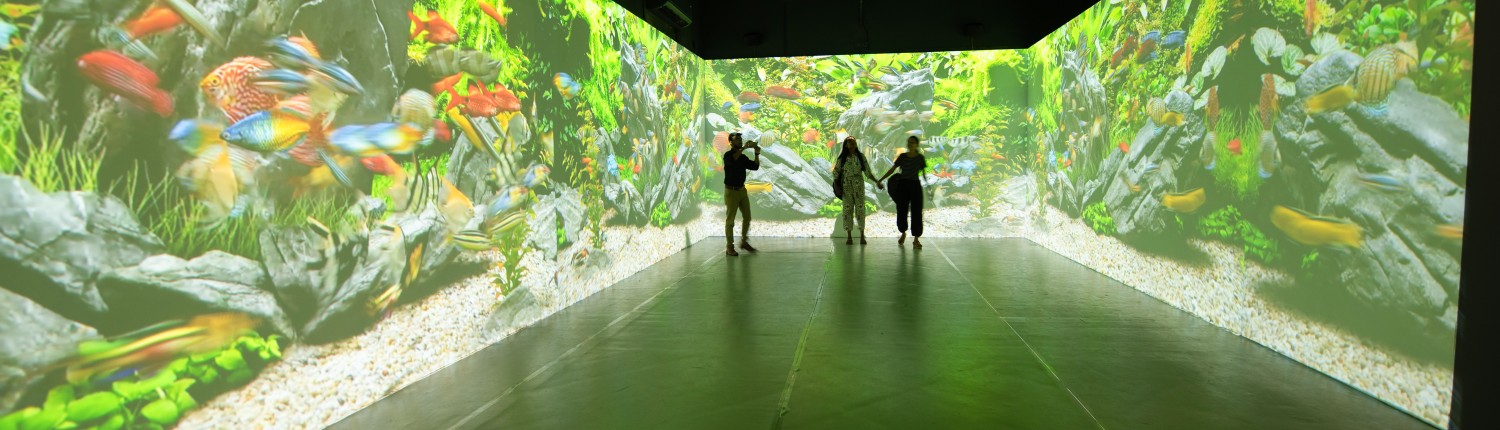
Interactive, immersive full-room display of a seamless aquarium where visitors may design and set free their own fish – a digital ode to the ancient Japanese record-keeping practice of Gyotaku or fish-drawing.
Exhibits developed for ‘Existing amidst Extinction’ Section
Marine Megafauna
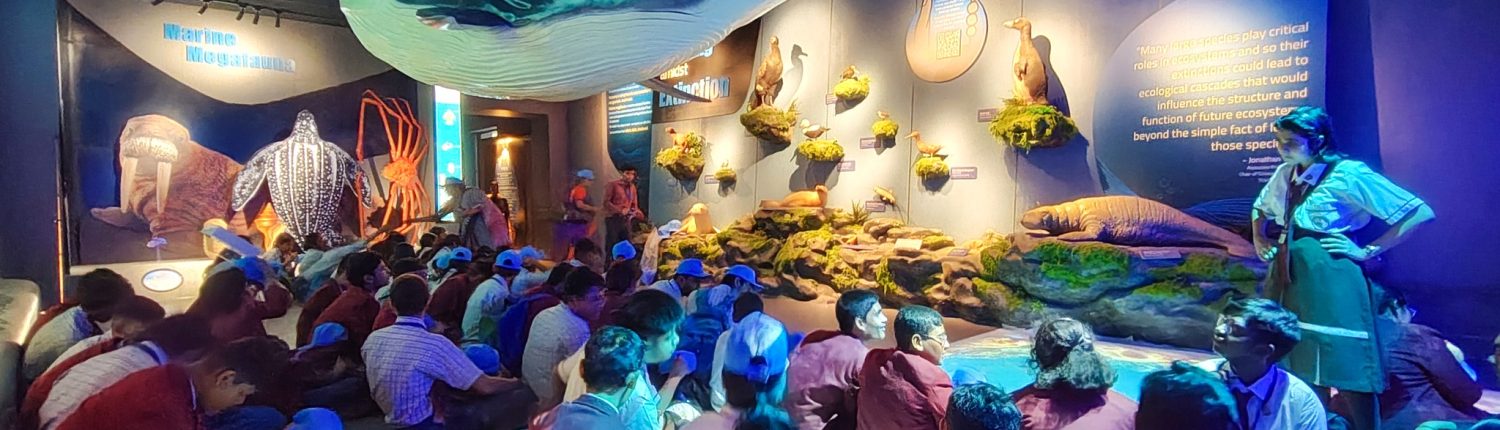
Full-scale display of a blue-whale calf – along with other marine giants – critical to ecosystem function because of their preferential position at the top of food webs and importance to nutrient cycling and bioturbation of sediments.
AR-enabled Extinct Marine Species Wall
Meet the species – mammals, birds, fishes, lichen, sea shells – that have vanished forever from our oceans – industrialized for food, fossil fuels, minerals, energy, and transportation. Scan to see them come alive in this augmented-reality based exhibit – our only chance to experience them now.
Living Lights
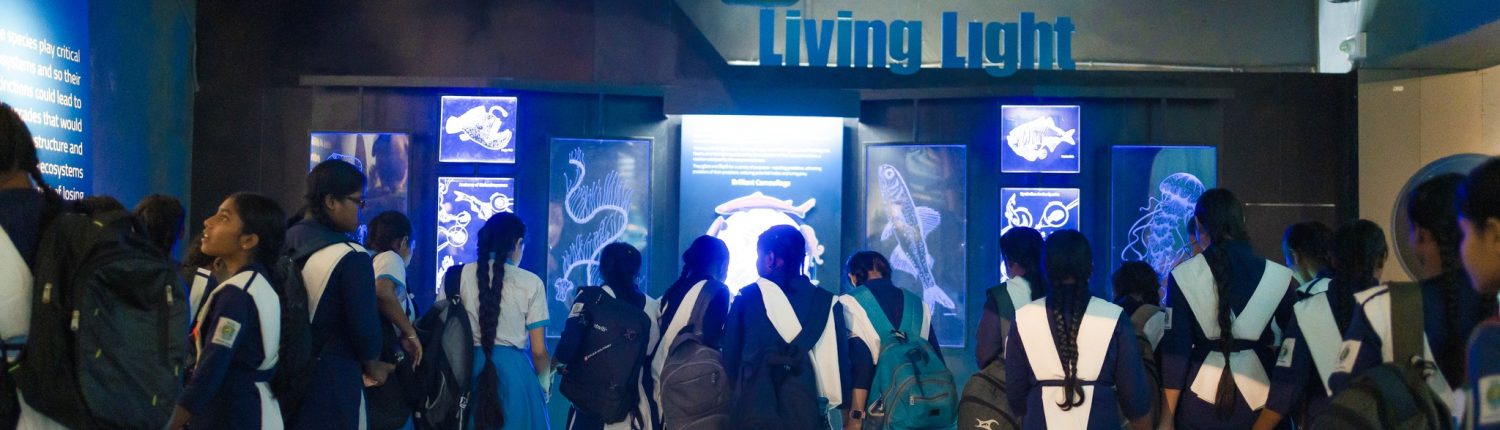
Illuminated, etched acrylic boards tell the story, anatomy, mechanism and purpose of deep sea bioluminescence developed in numerous exotic creatures.
Coral Conservation
Correlate change in ocean temperature, run-off and pollution, over exposure to sunlight and extreme low tides with conservation efforts on coral with hands-on rotary-device based exhibit.
Trap the Trash
Interactive floor-projection game challenging visitors to trap most common marine trash – including our everyday packaging items – by a simple foot tap.
Floor Area: 189 sq. m.
No. of Exhibits: 21
Related Links
- Gallery Brochure
- Extension Activities
- Press Coverages
- Nature Coverage – https://www.nature.com/articles/d44151-025-00233-9
- UN Ocean Decade Endorsement – https://oceandecade.org/events/lost-at-sea-existence-amidst-extinction/